


Commercial real estate can build generational wealth or become a financial sinkhole — often depending on decisions made before a single lease is signed. Unlike residential purchases, commercial deals carry layers of complexity that catch even experienced buyers off guard: environmental liability, zoning restrictions, tenant creditworthiness, and financing structures that behave nothing like a home mortgage. The stakes are high enough that mistakes made during due diligence rarely get corrected later. Understanding what actually goes wrong — and why — is the foundation of making a purchase that holds its value and performs the way you expect.
The Due Diligence Window Is Not a Formality
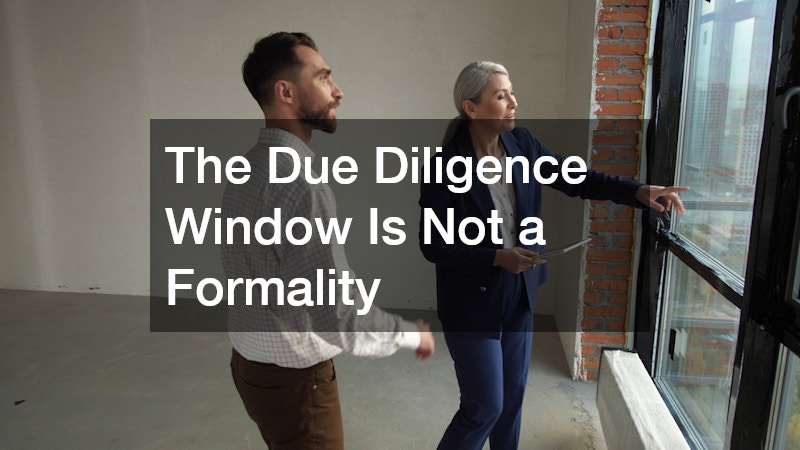
Most buyers treat the due diligence period as paperwork. It isn’t. It’s the only window in the transaction where you have leverage to renegotiate, walk away without penalty, or demand remediation — and it closes faster than most buyers anticipate.
A proper due diligence process for commercial property covers at minimum: title history and encumbrances, zoning compliance and permitted uses, existing lease agreements and rent rolls, utility infrastructure capacity, and environmental status. Each of these can independently collapse a deal or destroy projected returns.
Zoning deserves particular attention. A building zoned for light industrial use cannot automatically be converted to retail or office without municipal approval — a process that can take months and may be denied outright. Buyers purchasing with a specific use in mind should verify not just current zoning but conditional use permits and any deed restrictions that survive ownership transfer.
- Order a preliminary title report within the first five business days of the due diligence period to identify liens, easements, or encroachments before investing further time.
- Request the rent roll alongside the last 24 months of actual operating statements — not pro forma projections — to verify income claims against real performance.
- Confirm with the local planning department that your intended use is permitted under current zoning before spending on inspections or appraisals.
Environmental Liability Can Outlast the Seller
Environmental risk is where commercial buyers most frequently underestimate exposure. Under federal Superfund law, a property owner can be held liable for contamination they didn’t cause. Prior industrial use, dry-cleaning operations, auto repair shops, and gas stations commonly leave contamination that doesn’t show up in a visual walkthrough.
A Phase I Environmental Site Assessment is the baseline standard — it reviews historical records, aerial photos, and regulatory databases to flag potential issues. If red flags emerge, a Phase II assessment involves actual soil and groundwater sampling. Phase II costs typically run between $3,000 and $10,000 depending on site size and complexity, but discovering contamination after closing can result in remediation costs well into six figures.
The all-appropriate inquiries standard under EPA guidelines provides important legal protection — buyers who complete a compliant Phase I before closing can assert an “innocent landowner” defense if contamination is later discovered. Skipping it doesn’t save money; it eliminates a legal defense.
- Commission a Phase I Environmental Site Assessment from an accredited environmental professional before removing any contingency related to environmental condition.
- If the Phase I identifies any recognized environmental conditions, budget for a Phase II before finalizing purchase price — use Phase II findings to negotiate a price reduction or seller-funded remediation escrow.
Understanding What the Building Is Actually Worth
Commercial property valuation differs fundamentally from residential appraisal. The income approach — which values the property based on its net operating income divided by a market capitalization rate — drives most commercial valuations. This means a building’s value is directly tied to the quality and stability of its leases, not just its physical characteristics.
A property showing a 7% cap rate in a market where comparable assets trade at 5.5% might look like a bargain. More often, it signals risk: a below-market lease expiring soon, a tenant in financial difficulty, deferred maintenance that experienced buyers have already priced in, or a location with weakening fundamentals. Cap rate compression doesn’t always mean appreciation — sometimes it just means the market has already found the flaw you haven’t yet.
The physical condition assessment your inspector produces is equally critical to valuation because deferred maintenance on commercial buildings scales differently than in residential. A failing HVAC system in a 40,000-square-foot office building doesn’t cost $8,000 to replace — it can cost $150,000 or more, and it comes off your net operating income the moment the tenant lease obligates you to maintain it.
- Hire a commercial-specific appraiser with experience in your property type — retail, industrial, multifamily, and office assets use different valuation methodologies and comparable sets.
- Review the lease abstracts for every tenant before accepting the income figures in any offering memorandum — verify rent escalation clauses, renewal options, and who bears responsibility for capital expenses.
Financing Structures That Can Surprise You

Commercial loans operate on different logic than residential mortgages. Most are structured with 5- to 10-year balloon payments on 20- to 25-year amortization schedules, meaning the full principal balance comes due well before the loan is paid off. If market conditions or property performance have deteriorated by then, refinancing may not be available at favorable terms.
Debt service coverage ratio requirements also differ. Most commercial lenders require a DSCR of at least 1.25, meaning the property’s net operating income must exceed the annual debt service by 25%. A property generating $120,000 in NOI with $100,000 in annual debt service passes at a 1.2 DSCR — and many conventional lenders would decline it.
SBA 504 loans offer an alternative for owner-occupied commercial purchases, allowing buyers to secure financing with as little as 10% down on properties where they will occupy at least 51% of the space. The tradeoff is that 504 loans carry occupancy requirements and prepayment penalties that restrict flexibility.
- Model at least three refinancing scenarios before closing: one assuming stable market conditions, one assuming a 15% decline in NOI, and one assuming cap rate expansion of 100 basis points.
- If the deal relies on future rent growth to service debt comfortably, stress-test it against flat rents for three years — if it doesn’t survive that test, the leverage is too aggressive.
Lease Structures Determine More Than You Think
For income-producing properties, the lease structure matters as much as the tenant. A triple-net lease shifts property taxes, insurance, and maintenance costs to the tenant — significantly reducing landlord exposure. A gross lease does the opposite, leaving those costs with the owner. Misreading lease type is one of the more expensive errors buyers make when projecting cash flow.
Modified gross leases sit in between and vary enormously in their specifics. Two buildings with superficially identical rent rolls can produce very different returns depending on which expenses the landlord absorbs. Always calculate net effective rent after all landlord obligations, not gross rent.
Lease term and tenant creditworthiness also affect financing and value. A 10-year lease with an investment-grade national tenant is a fundamentally different asset than a month-to-month arrangement with a local operator — lenders and future buyers will price them accordingly.
When the Numbers Are Right and the Deal Still Feels Wrong
Experienced commercial buyers develop an instinct for deals that look clean on paper but carry soft risk — a neighborhood whose anchor tenant just announced closure, a market where new supply is scheduled to deliver within 18 months, or a seller whose motivation seems disconnected from market conditions.
These factors don’t always appear in the financials, which is why experienced investors spend time on the ground before committing. Walking the surrounding blocks, speaking with adjacent tenants, and reviewing municipal planning records for upcoming developments can surface information that no offering memorandum will volunteer.
Making the Offer with the Right Protections in Place
Buying commercial property without adequate contingencies is how buyers get trapped. A well-structured letter of intent should outline the due diligence period length (typically 30-60 days), financing contingencies with specific DSCR and LTV thresholds, and what representations the seller is making about environmental condition, lease status, and pending litigation.
Getting the LOI right matters because it sets the negotiating frame for the purchase and sale agreement. Sellers who push back on standard contingencies are often signaling something — the instinct to accommodate in order to keep the deal moving can be costly if it means accepting terms that eliminate your ability to exit cleanly.
- Include a financing contingency that specifies a minimum loan amount, maximum interest rate, and acceptable amortization schedule — vague financing contingencies are routinely challenged.
- Require estoppel certificates from all tenants above a threshold lease value (typically any tenant occupying more than 10% of the rentable area) before closing, confirming lease terms match what the seller has represented.
- Negotiate a seller holdback or escrow of 2-5% of the purchase price for a period of 12 months to cover representations and warranties that can only be verified after closing.
Protect Yourself Before You Sign Anything Final
The most consistent mistake among first-time commercial buyers is confusing activity with protection. Moving quickly, staying engaged, and having advisors is not the same as having the right protections in the right documents at the right time. A seasoned commercial real estate attorney — not a residential real estate attorney — should review every agreement before execution. Environmental counsel, a qualified property inspector, and a commercial appraiser each serve distinct functions that generalists cannot replicate.
The cost of that team — typically $15,000 to $30,000 for a mid-market transaction — is not overhead. It’s the price of knowing what you’re actually buying. Deals that get closed without it often look fine for a year or two, until something that due diligence would have surfaced becomes your problem to solve.
