

Every homeowner eventually faces the same nagging question: is it smarter to fix what is broken or replace it entirely? The answer is rarely emotional, even though it often feels that way when a beloved appliance or aging system finally quits. The real decision comes down to numbers, timelines, and risk, not sentimentality. This article breaks down the actual math behind repair versus replace decisions so you can make a choice that protects both your budget and your home’s long-term value.
- Calculating the True Cost of Ongoing Repairs
- Diagnosing Root Causes Before You Commit to a Fix
- Weighing Age and Expected Lifespan of Major Systems
- Comparing Energy Efficiency Gains Against Upfront Investment
- Evaluating Water Quality Systems and Long-Term Health Costs
- Assessing Roofing Damage With Repair Versus Full Replacement in Mind
- Factoring in Material Costs and Sustainable Disposal
- Deciding When a Kitchen Update Makes More Financial Sense Than Repairs
- Recognizing When Structural Components Signal Bigger Problems
- Using Modern Technology to Make Smarter Repair Decisions
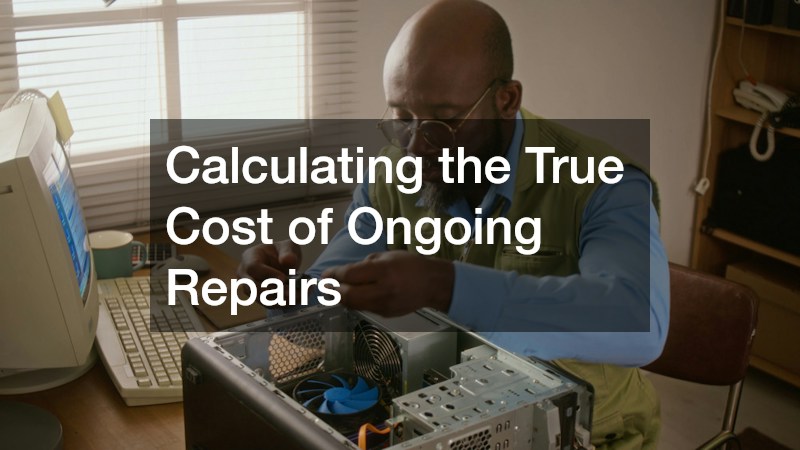
Calculating the True Cost of Ongoing Repairs
Before deciding whether to repair or replace something, you need an honest tally of what you have already spent keeping it alive. Many homeowners underestimate this number because repairs happen sporadically over months or years, making the total feel smaller than it actually is. Add up every service call, part replacement, and labor charge from the past two to three years to get a realistic baseline.
Once you have that figure, compare it to the cost of a full replacement. A common rule of thumb used by technicians is that if cumulative repair costs exceed fifty percent of replacement cost, replacement usually wins financially.
- Track repair invoices in one folder or spreadsheet for easy review
- Include both parts and labor, not just the obvious big-ticket repairs
- Factor in trip charges and diagnostic fees that add up quietly
- Compare the total against current replacement pricing, not what you paid originally
Diagnosing Root Causes Before You Commit to a Fix
Sometimes the smartest move before spending another dollar on repairs is to understand why the system keeps failing in the first place. This is where a proper failure analysis becomes valuable, because it identifies whether a breakdown is an isolated incident or a symptom of a larger, ongoing problem. A technician who traces the root cause can tell you whether you are looking at a one-time fix or the first of many future repairs.
Skipping this step is how homeowners end up in a repair loop, paying for the same symptom over and over without addressing the underlying issue. A thorough diagnostic approach saves money in the long run because it prevents guesswork and wasted parts.
- Ask for a written explanation of what caused the failure
- Request documentation showing related components that may fail next
- Use the findings to decide if repair is truly a long-term solution
Weighing Age and Expected Lifespan of Major Systems
Every major home system has a predictable lifespan, and knowing where your equipment falls on that timeline is critical to making a smart decision. A furnace nearing twenty years old behaves very differently than one that is five years into a fifteen-year lifespan. Replacing something too early wastes remaining value, while replacing too late means paying for repairs on borrowed time.
- Water heaters typically last eight to twelve years
- HVAC systems average fifteen to twenty years with proper maintenance
- Roofing materials range from twenty to fifty years depending on type
- Major appliances generally last ten to fifteen years
Comparing Energy Efficiency Gains Against Upfront Investment
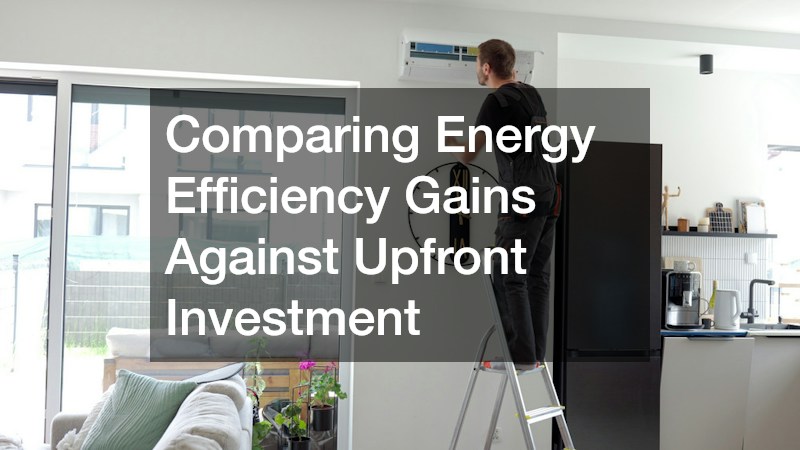
Older systems almost always cost more to operate than newer ones, and this hidden expense rarely gets factored into repair-versus-replace math. A twelve-year-old air conditioner might still run, but it could be consuming thirty to forty percent more energy than a current model. Many AC companies now offer efficiency comparisons that show homeowners exactly how much a new unit could save monthly on utility bills.
These savings compound over time, sometimes offsetting a significant portion of the replacement cost within five to seven years. When you calculate the true cost of ownership, factor in utility bills alongside the purchase price, not just the sticker number on a quote.
- Request an energy efficiency comparison before committing to a repair
- Look at SEER ratings for cooling systems and AFUE ratings for heating systems
- Ask about rebates or incentives tied to efficient replacements
Evaluating Water Quality Systems and Long-Term Health Costs
Plumbing-related decisions often extend beyond pipes and fixtures into the quality of the water running through them. Homeowners dealing with hard water, sediment, or contamination issues frequently reach a point where patch repairs no longer make sense. Investing in water filtration systems can eliminate recurring problems like clogged aerators, scale buildup, and appliance strain that come from constantly treating symptoms rather than the source.
The math here includes not just plumbing repair savings but also extended lifespan for water heaters, dishwashers, and washing machines that no longer fight against mineral buildup. When you add up the cost of repeated small repairs caused by poor water quality, a filtration upgrade often pays for itself within a few years.
- Test your water hardness and mineral content before deciding
- Compare filtration system costs against appliance repair history
- Consider whole-home versus point-of-use systems based on your needs
Assessing Roofing Damage With Repair Versus Full Replacement in Mind
Roof decisions are some of the highest-stakes calls a homeowner makes, since the cost gap between a patch job and full replacement can run into the tens of thousands of dollars. A reputable residential roofing company will typically inspect the full roof structure, not just the visible leak, before recommending a path forward. If damage is isolated to one section and the roofing material still has years of life left, a targeted repair is usually the financially sound choice.
However, widespread granule loss, multiple leak points, or structural sagging often signal that repair is only delaying an inevitable and more expensive replacement. Getting a written inspection report helps you see the full picture rather than reacting to a single leak in isolation.
- Ask for photos documenting the extent of damage
- Request an estimate for both repair and full replacement
- Consider the remaining lifespan of the existing roofing material

Factoring in Material Costs and Sustainable Disposal
Replacement projects generate waste, and the cost of removing and disposing of old materials is often left out of homeowner budgets entirely. Larger renovation projects, in particular, produce debris that must be hauled away, and many municipalities now require documented c d recycling for construction and demolition materials. This adds a line item to your budget that is easy to overlook until the invoice arrives.
Choosing contractors who already have recycling processes in place can reduce disposal fees and sometimes qualify projects for local incentives. It is worth asking upfront how debris will be handled and whether that cost is included in your quote.
- Ask contractors directly about their debris disposal process
- Check if your municipality mandates recycling for renovation waste
- Factor disposal costs into your total project budget, not just materials
Deciding When a Kitchen Update Makes More Financial Sense Than Repairs
Kitchens present a unique version of this decision because problems rarely show up in just one place. A leaking faucet might reveal water damage under aging cabinets, or a failing dishwasher might expose outdated wiring that no longer meets code. In these cases, homeowners often find that a full kitchen remodel actually costs less over time than a string of disconnected repairs addressing the same worn-out space.
The math becomes clearer when you consider resale value alongside functionality. A well-planned remodel can recoup a significant percentage of its cost at resale, while scattered repairs typically add little to home value and simply delay the inevitable.
- Get quotes for isolated repairs and a full remodel to compare
- Factor in resale value recovery percentages for your area
- Consider how many separate systems in the kitchen are aging simultaneously
Recognizing When Structural Components Signal Bigger Problems
Some repair decisions are not about comfort or convenience but about structural integrity, and these require a more technical eye. Bar joists supporting a garage, workshop, or addition can corrode or weaken over time, and a sagging or bouncy floor is often the first visible sign. Cracked drywall near ceiling lines, doors that no longer latch properly, or gaps forming between walls and flooring can also point to the same underlying issue. The math here isn’t just about repair cost versus replacement cost; it’s about the cost of getting the decision wrong.
A localized fix on a single corroded joist might run a few hundred dollars, while replacing an entire joist system in a two-car garage can easily climb into the five-figure range. But underestimating the damage and patching a symptom instead of the cause can lead to far more expensive failures down the road, including collapsed flooring or costly insurance disputes if the damage was foreseeable. Because these components bear significant load, a licensed structural engineer should inspect the joists, connections, and bearing points before deciding whether reinforcement or full replacement is the safer path.
That inspection typically includes checking for rust scaling, weld integrity at bearing plates, and deflection under load, not just a visual scan from below. The engineer’s report, not a contractor’s estimate alone, should ultimately drive whether the fix is a targeted reinforcement, a partial replacement of affected spans, or a full system overhaul.

Outbuildings present their own version of this calculation, especially for property owners using hoop buildings for storage, agriculture, or equipment protection. These structures typically carry a fabric cover life expectancy of 15 to 20 years, while the galvanized steel frame can last considerably longer if maintained properly. The trouble starts when owners try to stretch the fabric’s lifespan well past its rating, patching tear after tear instead of budgeting for a full recover.
A single small tear caught early might cost a few hundred dollars to patch. But once UV degradation sets in across the entire cover, the fabric becomes brittle and prone to tearing in multiple locations simultaneously, often after a wind event or heavy snow load. At that point, owners are essentially paying repeatedly for a temporary fix on a covering that has already failed structurally.
Frame corrosion complicates the decision further. Surface rust on connectors or purlins is usually manageable with treatment and repainting, but rust that has compromised the structural integrity of the trusses or base rails is a different problem entirely. If a qualified inspector finds pitting, thinning metal, or bent members from snow load stress, that’s a signal the frame itself is nearing the end of its service life, not just the fabric.
The math tips toward replacement when repair costs approach 40 to 50 percent of a new structure’s price, or when repeated fixes are needed within a 12-month window. At that threshold, a full recover or new hoop building typically delivers more usable life per dollar spent than continuing to chase failures on aging fabric and frame components.
- Watch for sagging, bouncing, or visible rust on structural supports — deflection exceeding L/240 span ratio usually signals more than cosmetic wear
- Check for secondary red flags like cracked welds, popped fasteners, or daylight gaps at connection points
- Have a qualified engineer inspect load-bearing joists and connections before patching them, especially on structures over 15-20 years old
- Get a written load assessment, since a $500-1,000 inspection can prevent a costly failure or liability claim later
- Compare recover costs against full replacement for fabric-covered structures, factoring in remaining frame life, not just upfront price
- Recovering typically runs 40-60% of full replacement cost but only makes sense if the frame has 10+ years of service life left
Using Modern Technology to Make Smarter Repair Decisions
Diagnostic tools have improved dramatically, and many contractors now use cutting edge equipment to identify problems that used to require guesswork. Infrared cameras can detect hidden moisture behind walls, smart sensors can monitor HVAC performance in real time, and digital diagnostic tools can pinpoint electrical faults without tearing into walls unnecessarily. This technology gives homeowners more confidence in repair-versus-replace decisions because it removes much of the uncertainty that used to drive costly guesswork.
When getting quotes, ask whether the contractor uses any of these tools during inspection. A more precise diagnosis often means a more accurate cost comparison, which ultimately leads to a smarter financial decision either way.
- Ask if infrared or thermal imaging is used for moisture detection
- Inquire about digital diagnostic tools for electrical or mechanical systems
- Request documentation of findings, not just a verbal opinion
The repair-versus-replace decision always comes down to comparing real numbers against realistic expectations for remaining lifespan and future costs. Gather your repair history, get professional inspections, and ask pointed questions before committing either way. With the right data in hand, you can make a confident choice that protects your budget today and your home’s value for years to come.
