

When a business’s daily operations lead to property damage, physical injury, or financial loss, figuring out who actually owes you compensation can feel overwhelming. Liability rarely rests in one obvious place, and businesses often rely on contractors, vendors, and insurance carriers that each try to shift blame elsewhere. Understanding how responsibility is assigned in these situations helps you protect your rights and know what steps to take next. This guide breaks down common scenarios where business operations cause harm and explains who typically bears the legal and financial burden.
Determining Fault When a Company Vehicle Causes a Crash
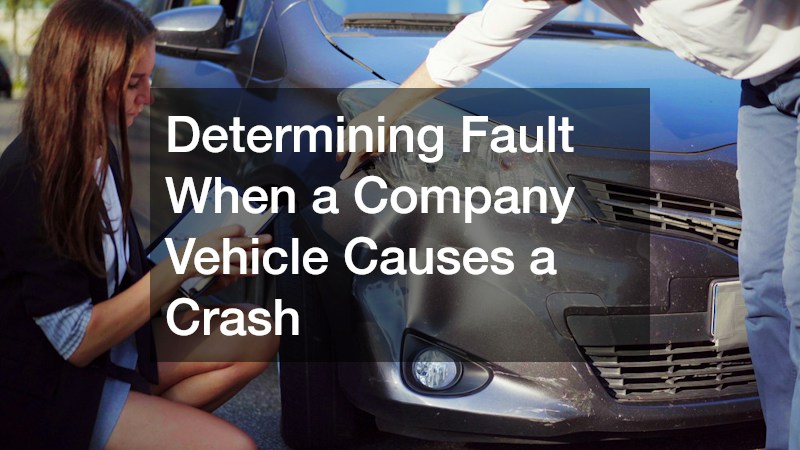
When a delivery van, service truck, or company car causes a collision, liability often extends beyond the driver to the employer itself. Under a legal principle called vicarious liability (also known as respondeat superior), businesses can be held responsible for accidents their employees cause while performing job-related duties. This means the company’s insurance policy, not just the driver’s personal coverage, may be the primary source of compensation, which matters because commercial policies typically carry much higher limits than individual auto plans. The key question in these cases is whether the employee was acting “within the scope of employment” at the time of the crash. A driver running a scheduled delivery route or heading to a client meeting almost certainly qualifies. But a worker who detours to run a personal errand, grabs lunch far outside their route, or uses the vehicle after clocking out may fall into a gray area that shifts liability back onto the individual. Several other factors can complicate the picture. If the employee was driving under the influence, ignoring company policy, or operating a vehicle they weren’t authorized to use, the employer may argue the conduct fell outside normal job duties. Courts also look at whether the business exercised reasonable care in hiring, training, and supervising the driver, since negligent entrustment claims can arise if a company knowingly puts an unsafe driver behind the wheel. Because of these nuances, crashes involving commercial vehicles often trigger parallel investigations — one into the driver’s actions and another into the employer’s policies, maintenance records, and dispatch practices. The outcome determines not just who pays, but how much coverage is available to an injured party seeking full compensation.
When a company vehicle is involved in a crash, fault isn’t always as simple as determining who ran the red light. Courts and insurers typically look at whether the employee was acting within the scope of employment at the time, which affects whether the employer bears liability under respondeal superior principles. A driver running a personal errand during work hours may fall into a legal gray area that complicates the claim. Because commercial insurance policies and corporate legal teams get involved quickly after these incidents, injured parties often benefit from consulting an auto accident attorney who understands how commercial vehicle claims differ from standard car accident cases. Commercial policies frequently carry much higher coverage limits than personal auto insurance, sometimes $1 million or more, which means insurers have a strong financial incentive to minimize or dispute payouts. Adjusters representing these companies are often trained specifically to gather statements and evidence that limit the employer’s exposure. These claims frequently involve multiple layers of coverage, employer policies, and sometimes third-party logistics companies, making early legal guidance valuable. For example, a delivery truck accident might implicate the driver’s employer, the vehicle owner if it’s leased, and a staffing agency if the driver was contracted rather than directly employed. Determining which policy pays first, and how much, often requires reviewing maintenance records, dispatch logs, and driver qualification files. Because evidence like black box data, GPS tracking, and internal safety reports can be altered or lost over time, acting quickly after a crash is critical. An attorney can send preservation letters to ensure this documentation isn’t discarded during routine business operations, protecting the injured party’s ability to build a strong claim.
- Check whether the driver was acting within the scope of employment at the time of the crash — a delivery run counts, but a personal errand on the way home usually doesn’t.
- Identify whether the vehicle was company-owned, leased, or a personal vehicle used for work, since leasing agreements often shift certain liabilities to the leasing company.
- Request dashcam or telematics data, which many commercial fleets now carry; GPS logs, speed records, and braking patterns can confirm or contradict a driver’s account.
- Determine if a third-party contractor was operating the vehicle instead of a direct employee, as this can shift liability away from the business entirely.
- Review the company’s vehicle maintenance logs to rule out mechanical failure as a contributing cause.
- Confirm whether the driver held a valid, appropriate license for the vehicle class involved in the crash.
Assigning Responsibility for Falling or Defective Signage
Storefront signs, pole signs, and illuminated displays are heavier and more complex than they appear, and when they are installed improperly or fall into disrepair, the consequences can be serious. Liability in these cases often depends on who designed, installed, and maintained the structure. Property owners, manufacturers, and installation crews can all share responsibility depending on the circumstances.
Many businesses outsource this work to sign companies that specialize in design, fabrication, and mounting, and those vendors typically carry their own liability insurance for installation errors. If a sign was improperly anchored or made from substandard materials, the installer or manufacturer may bear more responsibility than the business displaying it. Maintenance records and inspection history often become key evidence in determining who failed to catch a hazard before it caused harm.
- Request inspection and maintenance logs for the signage in question.
- Identify whether the sign was recently installed, repaired, or modified.
- Determine whether weather damage played a role, which can shift liability toward maintenance negligence.
- Find out if the installer followed local building and safety codes.
Holding Businesses Accountable for Unsafe Premises
Slip-and-fall incidents, inadequate lighting, and poorly maintained walkways fall under premises liability law, which holds property owners and tenants responsible for keeping their spaces reasonably safe. A business does not need to have intended harm to be held liable; simple negligence, like ignoring a known hazard, is often enough. Courts typically look at whether the business knew or should have known about the dangerous condition.
Documentation plays a major role in these cases, so photographing the hazard, gathering witness statements, and requesting incident reports can strengthen a claim significantly. Businesses are expected to conduct regular safety inspections, especially in high-traffic areas like entrances, stairwells, and parking lots. When a company fails to meet this standard of care, injured visitors may have grounds for a legitimate injury claim.
- Take photos of the hazard immediately, including lighting conditions and surrounding areas.
- Ask for a copy of the incident report filed with the business.
- Identify any prior complaints or similar incidents at the same location.
- Note whether warning signs or barriers were present at the time.
Evaluating Harm Caused During Commercial Relocation Projects
Relocating a business involves transporting expensive equipment, sensitive documents, and sometimes hazardous materials, all of which introduces significant risk if something goes wrong. Damage to property, injuries to workers, or harm to bystanders during a move can raise complicated liability questions involving multiple parties. The business owner, the moving crew, and even building management may all play a role in how the incident unfolded.
Because commercial moves often involve specialized equipment and tighter timelines than residential relocations, business moving companies typically carry higher liability coverage limits to account for the increased risk. Still, disputes commonly arise over whether damage occurred due to improper packing, negligent handling, or pre-existing conditions. Reviewing the moving contract carefully before a project begins can clarify who assumes responsibility for different types of loss.
- Confirm what the mover’s liability coverage actually includes before the move begins.
- Document the condition of valuable items and equipment with photos beforehand.
- Clarify responsibility for damage to the building itself, such as walls, doors, or elevators.
- Ask whether subcontractors will be involved, since this can complicate liability.
Pursuing Compensation After Workplace or Customer Injuries
When someone is injured on business property, whether as an employee, customer, or visitor, the path to compensation depends heavily on their relationship to the business. Employees typically file through workers’ compensation systems, while customers and non-employees may need to pursue a separate injury claim against the business directly. These two tracks have different rules, deadlines, and compensation structures.
Given how complex these distinctions can be, many injured individuals turn to personal injury lawyers early in the process to understand which legal path applies to their situation. An experienced attorney can also help determine whether a third party, such as an equipment manufacturer or contracted service provider, shares liability alongside the business. This matters because settlements involving multiple liable parties often result in higher total compensation than pursuing a single party alone.
- Identify your legal status at the time of injury: employee, contractor, customer, or visitor.
- Request medical documentation that directly ties the injury to the incident.
- Determine whether workers’ compensation bars a separate lawsuit against the employer.
- Look into whether equipment manufacturers or third-party vendors share fault.
Reviewing Insurance Policies That Businesses Rely On
Every business liability claim eventually runs into the question of insurance coverage, and understanding these policies helps set realistic expectations about compensation. General liability insurance typically covers third-party injuries and property damage, while separate policies may apply to vehicles, products, or professional errors. Businesses often carry multiple overlapping policies, and determining which one applies can take time.
Insurance adjusters work for the company paying their salary, not for the injured party, so their initial settlement offers are often lower than what a claim is actually worth. Reviewing policy limits, exclusions, and endorsements can reveal whether a business was underinsured for the type of harm that occurred. In cases involving significant damages, claimants may need to pursue compensation beyond a single policy’s limits.
- Ask for the specific policy type that applies to your claim, such as general liability or commercial auto.
- Review policy limits to understand the maximum available payout.
- Watch for exclusions that might limit coverage for certain types of incidents.
- Consider whether an umbrella policy might extend available coverage.
Knowing When to Involve Legal Representation
Not every incident requires a lawyer, but certain warning signs suggest it is time to get professional guidance rather than negotiating directly with a business or its insurer. Severe injuries, disputed fault, and lowball settlement offers are common red flags that indicate the stakes are too high to handle alone. The earlier legal representation gets involved, the more evidence can be preserved before it disappears.
Consulting an accident lawyer costs nothing in most cases, since many work on contingency and only collect fees if they recover compensation for you. This arrangement allows injured individuals to get an honest assessment of their claim’s value without financial risk upfront. A good attorney will also handle communication with insurance companies, which removes pressure from the injured party during an already stressful time.
- Watch for pressure to settle quickly, which often signals the offer is lower than fair value.
- Consider legal help if liability is being disputed by multiple parties.
- Seek guidance if your injuries require ongoing medical treatment.
- Ask about contingency fee arrangements before committing to representation.
Liability after a business-related harm rarely points to a single, obvious party, and untangling who bears responsibility often requires careful documentation and a clear understanding of the parties involved. Taking the time to identify every contributing factor, from vehicle operators to vendors to property management, puts you in a stronger position to pursue fair compensation. If your situation feels complicated or the other side is pushing back, seeking a professional evaluation of your claim is a reasonable and often necessary next step.
